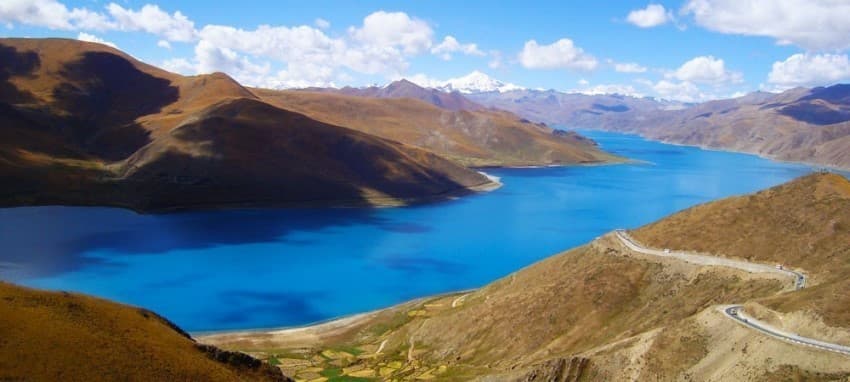
Tibet Autonomous Region lies in the southwest of the People’s Republic of China and in the Qinghai-Tibet Plateau. Tibet is one of the highest regions on Earth, with an average elevation of 4,900 meters. The vast grasslands, high mountains, alpine lakes, and ancient spiritual monasteries attract tourists, naturalists, trekkers and adventure seekers alike to this spectacular region.
Tibet is considered the poorest state in China where the majority of Tibetans rely on subsistence agriculture for survival. The most common occupation is raising livestock, such as sheep, cattle, goats, camels, yaks, dzo, and horses. The main crops grown are barley, wheat, buckwheat, rye, potatoes, and assorted fruits and vegetables. In recent years, tourism in Tibet has flourished. Tourism has brought in the most income from the sale of locally made handicrafts. Since Tibet became part of the People’s Republic of China in the 1950’s, China has invested billions of dollars in development and infrastructure for Tibet. Tibet is indeed a very rich and beautiful land with more than fifteen peaks above 7000 m. among which eleven are over 8000m.
The intense spirituality of the Tibetan people is ever-present in their remote monasteries, traditional homes and colorful marketplaces. Join the pilgrim's circumambulations, sample yak butter tea, eat plenty of dumplings and immerse yourself in the atmospheric monastic rituals. Complete this exciting adventure with a spectacular close up view of Mt. Everest. Tibet is one of the most extraordinary destinations in the world, where adventure is lurking around every corner.
Contrary to popular images of Tibet, Lhasa has a pleasant climate, with nearly all its rainfall occurring in the summer. For most of the year the weather is sunny and dry, mild during the day from April to October, and not unbearably cold in the winter.
If you are interested in exploring magical Tibet, below are some of our itineraries or alternatively we can connect with you to personally tailor your own itinerary.