EBC Trek @ $1170 PP Reserve Now For 2025 & 2026 Join Now
Kathmandu Lhasa tour
DestinationTibet
Duration8 days
GradeModerate
ActivitiesGuided Cultural Tour
AccommodationHotels and Resorts
Max. Elevation5300m.
Group Size15+
VehiclePrivate and Local Vehicle
MealsModified American Plan (MAP)
Trip Highlights
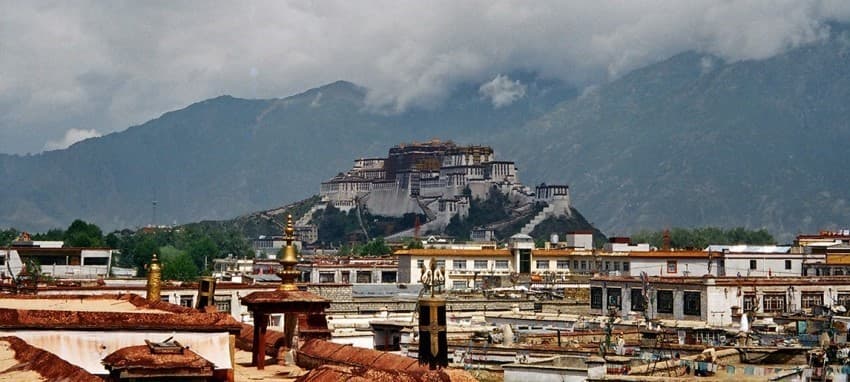
A great opportunity to feel driving in high altitude an to visit monasteries: - Tashilampu, Patala Palace, Jokhang, Drepung, Sera. It is also an opportunity to explore colorful Yamdrok Lake, crossing over 5,000m. highest passes and its beautiful decorative by Tibetan flags. Tibetan peoples and culture is again another charm to explore in this tour.
Trip Overview
This cultural and Himalayan journey connects two ancient cities of the Himalayas—Kathmandu and Lhasa—offering a blend of heritage, spirituality, and breathtaking landscapes.
The tour begins in Kathmandu with arrival and exploration of UNESCO World Heritage Sites, including sacred Hindu and Buddhist landmarks that reflect Nepal’s rich cultural harmony. After preparation for high-altitude travel, the journey continues with a scenic flight over the Himalayas to Lhasa, providing stunning aerial views of Mount Everest and surrounding peaks.
Upon arrival in Lhasa, travelers acclimatize while exploring iconic sites such as the Potala Palace, Jokhang Temple, and Barkhor Street, which highlight Tibetan Buddhism and ancient traditions. Excursions to nearby monasteries and cultural villages offer deeper insight into Tibetan lifestyle and spirituality.
The return journey follows the same dramatic Himalayan route back to Kathmandu, concluding with leisure time for shopping or rest before departure.
This tour combines natural grandeur, spiritual discovery, and cultural immersion across Nepal and Tibet, making it one of the most enriching Himalayan experiences.
This fantastic trip gives you a beautiful introduction to Tibet for those with budget or time restraints. This tour is full of panoramic mountain views, scenic drives, ancient monasteries, colourful lakes, magnificent palaces, and vibrant Tibetan culture. The mountain road crosses over high passes and offers stunning scenery. We will spend two days in Lhasa exploring famous sites like the Potala Palace, Norbulingka Palace, Tibet Museum, Sera Monastery, Drepung Monastery, Jokhang Temple and Barkhor Bazaar. On the way to Shiagste, we pass by the exquisite Yomdrok-Tso (Turquoise Lake) and Mt. Nazin Kang Sa (7,252m). In Gyantse, you will have plenty of time to explore the influential Khumbum Stupa, Phalkot Monastery and Gyantse Dzong (Fortress). Tashilhunpo Monastery, founded by the first dalai Lama in 1447, is of both historical and culture importance and is the most popular landmark of Shiagatse.
High Himalayan Trekking offers Tibet tours for 2 days to 30 days all the destinations in Tibet. If you are interested in exploring the Tibet, below are some of the itineraries, or alternatively we can be in contact so you may personally tailor your own itinerary.
Trip Itinerary
The journey begins from Kathmandu, heading north towards the Nepal–Tibet border at Zhangmu. The drive passes through scenic hills, rivers, and terraced landscapes before reaching the Friendship Bridge at the border for immigration and customs formalities.
After completing border procedures, the route continues into Tibet, ascending gradually towards Nyalam (3,700m). The road climbs through dramatic Himalayan gorges, offering stunning views of snow-capped peaks and deep valleys.
The total distance of approximately 156 km typically takes around 6–8 hours depending on road and border conditions. Upon arrival in Nyalam, travelers rest and acclimatize to the higher altitude in preparation for the onward journey into the Tibetan plateau.
Included/Excluded
Nepal Tibet boarder Transportaion
Twin sharing accommodation in Tibet
Japanese Land cruisers (4WD, 4500 model) Or AC Bus during the Tibet Tour
Tibet entry permission, Monasteries entry fees
English Speaking Guide during Tibet tour
Breakfast every morning
Accomodation and Breakfast in Kathmandu
Tourguide for Kathmandu culture tour
Oxygen Cylinders as you need
Lunch and Dinner
Flight / Train fare from Lhasa onwards
Items of a personal nature such as alcoholic drinks, cold drinks, laundry.
Alternative transportation in case of heavy rain, landslide, strike, road blockade or any other unexpected circumstances.
any other expenses which is not mentioned in included section.
Dates and Prices
Good to Know
Useful Informations For Trekking
A typical trekking day
A typical day’s walk lasts from five to seven hours and involves a number of ascents and descents. It is rare to spend much time at the same level. On an organized camping trek, the day is run to a remarkably tight schedule: up at 6 am with a cup of tea, pack the gear before breakfast, start walking at 7 am, stop for lunch around 12 o’clock for about half an hour, start after lunch at noon and stop walking at about 3 pm. The dinner is served around 6.30 pm and followed by a briefing for the next trekking day and then it is time to go to sleep.
Please be aware that this time table may be adjusted according to weather conditions, availability of camp sites, water supply etc.
To ensure you will fully enjoy your trek and make the most of it, we also advise you about the following points which should seriously be taken into account:
Food and Water
Lodges and tea houses are carefully chosen by our staff all along the trek. We will make sure that excellent food will be provided to you and that water is boiled or adequately treated, as this is one of the basic rules for healthy trekking. On a camping trek, your only concern with food is sitting down to eat it! The porters carry all the food along with them and there will be a cook with assistants who can turn out meals of often stunning complexity, like baking a cake
Altitude Sickness
Acclimatization is very important for trekking above 3500m. Our trekking schedules have been carefully designed to maximize your ability to acclimatize safely. We ascend slowly and ensure an adequate number of rest days.
However, it is still possible for mountain sickness and your guide will be watching for symptoms with an experienced eye throughout the trip. These symptoms are commonly headache, nausea, lethargy and sometimes breathlessness. If you or any of the group members display any of these symptoms, we will be able to provide informed advice and ensure a proper course of action.
Money
Everything is included in the price of the trek, except for the purchase of water and soft / hard drinks so we advise you to always carry Nepalese rupees during your trek. The amount to be carried depends on the area and the duration of the trek.
Be a responsible trekker and minimize your impact
Although trekking in the Himalayas plays a vital role in the economy of many mountain areas, it also may have a negative impact which has become a major concern.
From an ecological point of view, always carry your rubbish with you, drink treated water instead of mineral water in order to reduce the use of plastic bottles.
Be respectful of the flora and the fauna.
From a human point of view, please respect Nepalese culture and traditions. It is a good thing before leaving for the trek to have a look at the “Do and Don’t” since an inappropriate behavior, though considered normal in Western countries, could severely shock or hurt local people.
Do not “steal” pictures and always ask permission from the person before photographing them.
Please do not give money or sweets to the children directly on your trip, as this encourages them to beg and may contribute to dental problems. If you would like to give something back, you can assist with our charity work by volunteering or giving a donation.
Travelling to Nepal: Insurance and Visa
Travel insurance
Travel Insurance is highly recommended for all of our clients who are travelling to Nepal in the near future. Before you buy Travel Insurance for Nepal, you should make sure that the Insurance policy covers the cost of a rescue helicopter from mountainous or remote regions of the country and covers all extreme activities for your trip such as rafting, expedition, trekking, canyoning etc. If you fall ill or have an accident during your trip in Nepal, the cost can become exorbitant if you lack travel insurance.
Many insurance companies from all over the world are providing travel insurance services at a reasonable cost and if you are travlling in a group, you may be able to get further discounts.
Finally, please always have a printed copy of your insurance policy handy while travelling in Nepal and also, save an e-copy online. If you need more information about travel insurance, please feel free to contact us.
Nepal Visa
Tourist who intends to visit Nepal must hold a valid passport and visa.
You may get your tourist visa in your home country or on arrival. We recommend you to get your tourist visa on arrival as it is very easy. To get your visa on arrival, you must have a valid passport and one passport sized photo with a light background.
Tourist Visa fee for visitors who enter Nepal for the first time in a visa year, from January to December:
Multiple entry visa for 15 days US$ 25
Multiple entry visa for 30 days US$ 40
Multiple entry visa for 90 days US$ 100
You may pay in Euro, Swiss Franc, Pound Sterling, US Dollar, Australian Dollar, Canadian Dollar, Hong Kong Dollar, Singapore Dollar and Japanese Yen. Credit card, Indian currency and Nepali currency are not accepted as payment of visa fee.
Tourist visa extension facility:
Visa extension fee for the period of 15 days us US$ 30
Visa extension fee for the period of more than 15 days US$ 2 per day.
Visa can be extended for a maximum period of 150 days in a visa year (January - December) at the Department of Immigration.
No visa required for:
Children below 10 yrs.
Any foreigner, who has stayed in Nepal up to fifteen (15) days continuously and re-enters Nepal during the same visa year.
Any tourist who is entering Nepal for three days or less.
Dos and Donts:
A tourist may stay in Nepal up to 150 days in a visa year.
A tourist must extend his/her visa before expiry of the visa validity period. A tourist who does not comply with these regulations may be liable of fine and other prosecution as provided in Immigration Act and Rules.
A foreigner having obtained tourist visa shall not be allowed to work with or without receiving remuneration.
A foreigner shall not be allowed to carry out any work other than that for which purpose s/he has obtained the visa.
Should you have any question regarding visas, please contact us.
Personal First Aid Kit
Although every guide on your trip carries a comprehensive medical kit, it is advisable to bring a small supply of first aid items for your own personal use. Base your kit on the following list, plus any special medications you may require:
Insect repellent.
Antiseptic cream.
Sun/face cream and lip screen.
Throat lozenges or hard candies.
Anti-diarrhoeal drug
Anti-protozoan. (Flagyl). Ask your doctor.
Antibiotics. A broad-spectrum antibiotic. Please ask your doctor.
Analgesics. Aspirin, Advil or Tylenol - for headaches etc.
Moleskin or Second Skin for blisters.
Diamox. Already discussed.
Re-hydration salts. A small tub of Gatorade powder mix is a good idea.
Multi-vitamin tablets are a good idea.
Iodine-based water purification tablets.
Entrance fees for Heritage Sites / Museums / Zoo
Entrance fees must be paid before touring heritage sites around Kathmandu Valley like Bhaktapur Durbar Square, Patan Durbar Square, Kathmandu Durbar Square, Bauddhanath, Swayambhunath and Changu Narayan Temple. Entrance fees must be paid before touring Lumbini Gardens, the sanctuary of the Mayadevi Temple, the birthplace of Lord Buddha, in Lumbini, Rupandehi. Entrance fees must be paid before touring the Central Zoo in Jawalakhel, Lalitpur, and museums in Kathmandu Valley. Entrance fees must also be paid before touring local museums in different parts of Nepal.
Foreigners
SAARC
Nepalese
Narayanhiti Durbar Museum
Rs. 500
Rs. 250
Rs. 100
Kathmandu Durbar square
Rs. 750
Rs. 150
free
National Museum Chhauni
Rs. 200
Rs. 25
Rs. 20
Patan Durbar Square
Rs. 500
Rs. 100
free
Patan Museum
Rs. 250
Rs. 25
Rs. 10
Patan Golden Temple
Rs. 50
Rs. 20
free
Mahabouddha Temple
Rs. 50
Rs. 30
free
Bhaktapur Durbar Square
Rs. 1,500
Rs. 500
free
National Art Museum, Bhaktapur
Rs. 100
Rs. 50
Rs. 20
Swayambhunath Stupa (Monkey Temple)
Rs. 200
Rs. 50
free
Bouddhanath Stupa
Rs. 250
Rs. 150
free
Pashupatinath Temple
Rs. 1,000
Rs. 1,000
free
Changu Narayan Temple
Rs. 100
Rs. 25
free
Ethnographic Museum, NTB
Rs. 200
Rs. 100
Rs. 30
General Health & Medicine Advice
You should make an appointment to get a check-up with your family doctor and dentist before embarking on your trip. Below is a quick list of frequently needed immunizations. This is only a basic guide and we strongly recommend that you follow the advice given by your doctor.
Tetanus: An updated booster shot every 10 years is recommended.
Typhoid: This series is now available in pill form and provides 5 years of coverage.
Hepatitis (A): The Hepatitis A Vaccine (commonly called Havrix) is highly effective and provides 10 years coverage.
Hepatitis (B): The Hepatitis B Vaccine is recommended for long term travelers and those in the health care profession. Twinrix is a combined Hepatitis A and Hepatitis B vaccine.
Meningitis A+C: This vaccination is now recommended for Nepal. Each shot provides three years of coverage.
Rabies Vaccine: Recommended for long term travelers but optional for tourists.
Cholera: The risk of cholera to the foreign traveler or resident in Nepal is still minimal.
Yellow Fever: Yellow fever is not a disease risk in Nepal and is only required if arriving from a country where yellow fever is present.
Diamox: A number of studies have consistently shown that the controlled taking of Diamox (Acetazolamide) can be effective in reducing some of the symptoms of AMS (acute mountain sickness). We would recommend that you ask your doctor to provide you with a small supply of Diamox (12 x 250mg tablets).
The equipment and clothing you require depends on where and when you trek. Of course, you will not need the same equipment for going up to the Everest Base Camp in the middle of winter and doing a short, low altitude trek.
One backpack to be carried by the porter with a large plastic bag to put inside the backpack in case of rain
One light day pack
One warm sleeping bag, especially if you camp. In tea houses, there is no heating in the rooms
One pair of waterproof broken in trekking shoes
Three pairs of socks
One rain coat
One down-jacket
One pair of long pants and one pair of short pants
Three T-shirts, long and short sleeves
One sweater
Three pairs of underwear
One bathing suit (there may be hot springs along the trek)
One pair of gloves
One warm hat / one sun hat
One pair of sunglasses, with good eye protection if you intend to climb glaciers
And also: head torch with extra batteries, multi-purpose knife, sun block lotion, towel, soap, toothpaste, toilet paper, a large reusable water bottle, purification drops/tablets to treat the water, medicine (band-aids, blister pads, painkillers, stomach pills, anti-diarrhea tablets, antibiotic, sterile plain and crepe bandages, tube of antiseptic cream, decongestants/antihistamines, throat lozenges, paracetamol or aspirin, camera equipment, binoculars, walking stick
By means of this letter I want to express my gratitude and recognition to Mr. Hari Krishna Devkota for the excellent service and help I have always received from his company in all of the Trekking and expeditions where we have worked together.
I particularly want to mention the 5...Read more +
MMatthew, Colin Green and all team England19th Apr, 2012
High Himalayan trekking and expedition is a trekking company which I would recommend highly without hesitation.
Our group of 9 ranging in age from 50 to 65 all achieved our principal goal of reaching Upper Mustang. This was only possible due to the professional way that...Read more +
Thank you for a wonderful, wonderful trip Tamang heritage trail and langtang trek! I cant express myself good enough in English - but everything was just perfect! The flights, itinerary, group, support team, hotels and the best of all, your company and handling of every potential crisis quietly and with...Read more +
First of all my warmest thanks to Harikrishna and your team for the outstanding service given to our three March/April Himalayan groups. Everyone has returned to Australia with memories that will last a lifetime. Many have commented on how warm and friendly the Nepalese people are, how welcome they were...Read more +
I am observing you for the past few years since my earlier trip to Muktinath. The decisions you take are not business like decisions, but they always have a human touch, which brings you more and more admirers like me. This, I am sure, will...Read more +